Work should move itself to the next person.
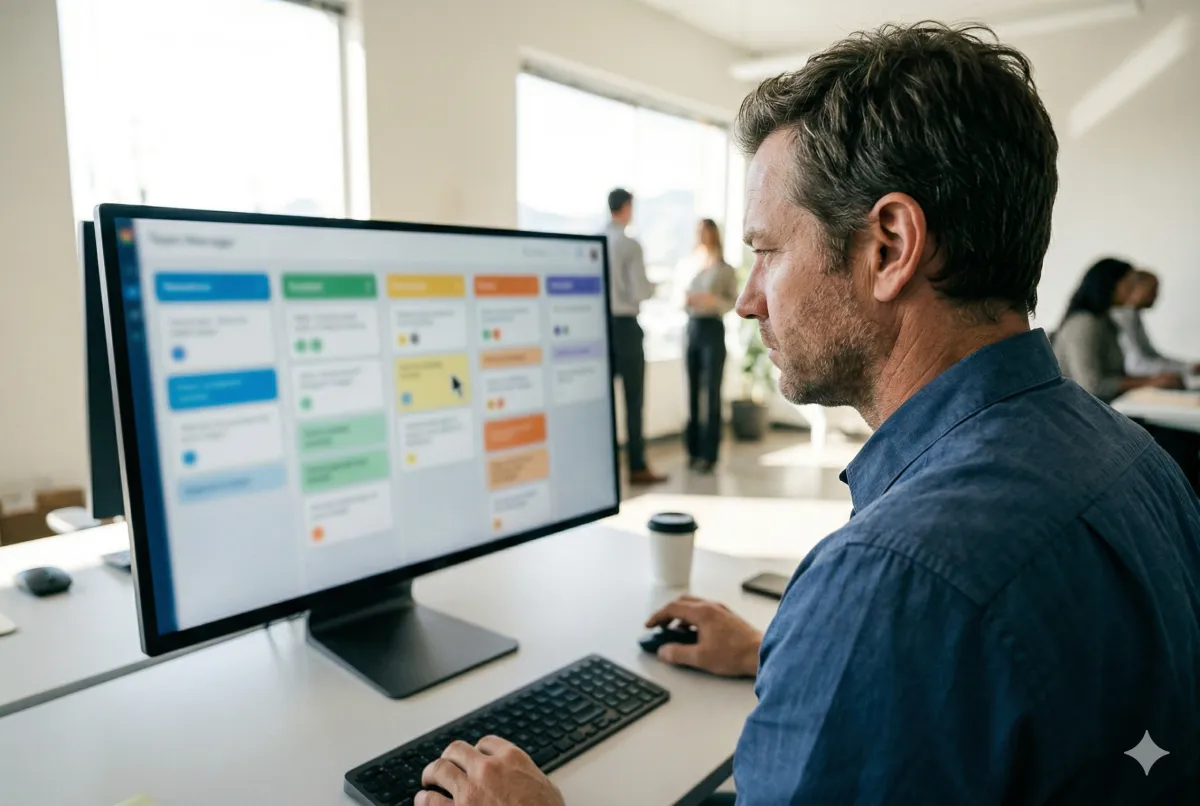
You shouldn't have to remember who's next, chase a finished task, or personally hand off every piece of work. Workkeeping routes jobs into tasks, assigns them to the right people, and moves each one forward the moment it's ready — so work flows without you pushing it.
Are you the one pushing every handoff?
Work doesn't stall because your team is slow. It stalls because nobody knows it's their turn — until you tell them.
You're the human router
A task finishes and just sits there. It won't move until you notice, remember who's next, and hand it over. Multiply that by every job in progress and you spend your day forwarding work instead of doing it.
2+ hours a day spent chasing and reassigning work
Nobody can see what's next
Is this waiting on review? On the client? On someone who's out today? Without a clear status on every job and task, work sits in limbo and no one is sure whose move it is.
Handoffs fall through the cracks
A step gets finished but the next person never hears about it. The work is "done" on someone's desk and dead in the water everywhere else — until a deadline reminds you it was never picked up.
Every handoff waits on you
When routing lives in your head, you become the bottleneck. Take a day off and the whole pipeline stalls, because you're the only one who knows what moves where.
Six ways work routes itself
Each one takes a handoff off your plate and moves it into the system.
Break a job into a clear sequence of tasks
Every job splits into tasks with their own owners, deadlines, and order. Complex engagements stop being one vague blob of work and become a line of concrete, completable steps anyone can pick up.
Every task lands with the right person
Tasks arrive already assigned — no daily "who's taking this?" huddle. The moment a job is created, each step shows up on the right person's list with the deadline attached.
Statuses move work forward
To-do, in progress, needs review, done — each status change pushes the job to its next stage. The status isn't decoration; it's the signal that hands the work along.
The next person hears about it instantly
When a step is finished or reassigned, the next owner is notified right away. No "did you get my message?" — the handoff happens the moment the work is ready, not the next time you remember to send an email.
Nothing ships until it's reviewed
Route work through a review step before it reaches the client. The reviewer sees exactly what's waiting on them, and work only moves on once it's approved — so quality isn't left to chance.
Send work to whoever has room
See who's overloaded and who has room before you assign. Route the next job to the person who can actually take it on, and balance the load before it turns into burnout.
Set the flow once, then watch it run
The calm that comes from knowing every job routes itself to the next person on schedule — without you standing in the middle of every handoff.
The cost of routing work by hand
40%
Of productive time is lost to task-switching when work has no clear next step. (American Psychological Association)
23 min
To fully refocus after each interruption — every "where's this at?" ping carries a hidden cost. (Gloria Mark, UC Irvine)
35% to 15%
Admin time drops when work routes itself instead of being chased and reassigned by hand each cycle. (Jetpack Workflow)
The honest part
Routing only works if the process is defined. Workkeeping won't invent your workflow for you — you still decide the steps, the owners, and what "done" means at each stage. Set that up once and the system carries it forever. Skip it, and you've only automated a mess.
Set the flow once. Let work route itself.
Your team moves work forward without you pushing every handoff. 14-day free trial, all features included.
Calculate my ROI 90-day double-your-money-back guarantee. Map your first workflow in under 20 minutes.